All dwellings require ventilation for a number of reasons:
- For the health and comfort of occupants;
- To ensure safe and efficient operation of combustion appliances which draw combustion air from within the dwelling;
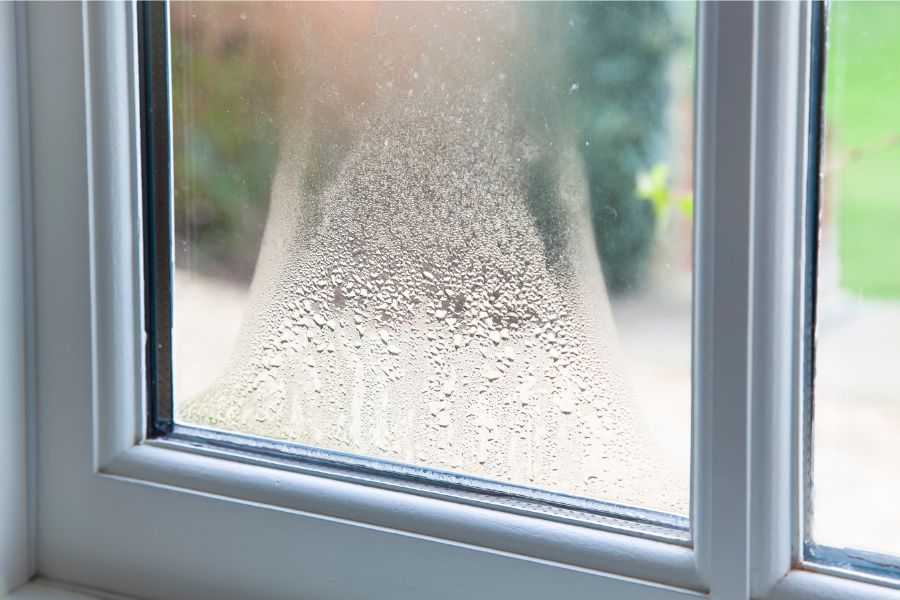
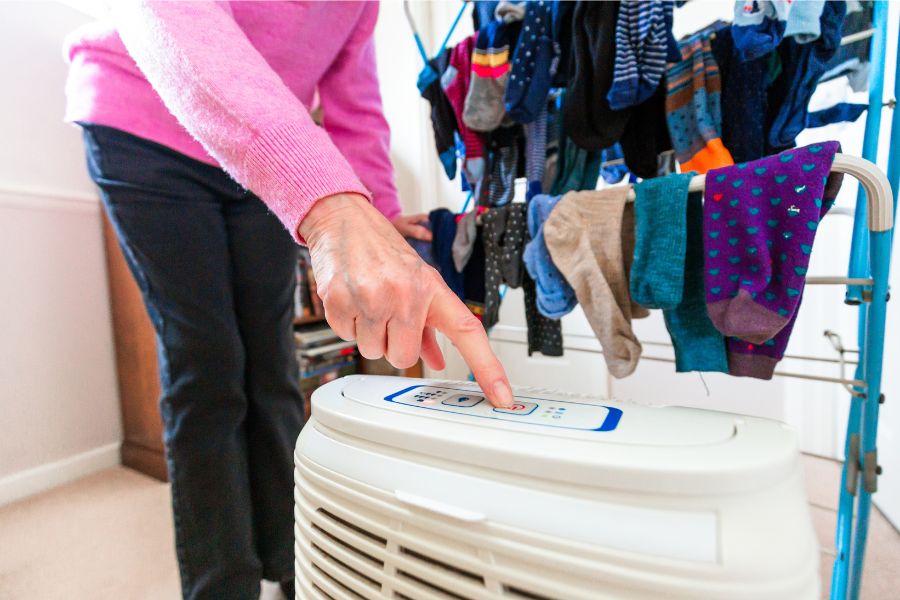
- To control condensation by the removal of moisture vapour;
- To remove other pollutants and odours.
In many dwellings, particularly older ones, ventilation is achieved either by the occupants opening windows or from natural air infiltration percolating through gaps in the building fabric. The consequences of this are that some rooms will be over-ventilated leading to occupants' discomfort from cold draughts, or under-ventilated leading to condensation in 'wet' areas such as kitchens and bathrooms. Occupants may attempt to compensate for these effects by increasing heating levels, and therefore wasting energy. Too much ventilation is wasteful of energy but too little ventilation is detrimental to the health and well being of both the occupants and the building fabric.
Associated with all ventilation (deliberate or accidental) will be the cost of heating the air before it leaves the building. These costs can be a significant proportion of space heating costs - up to one half in a modern well-insulated dwelling (because of the lower overall heat loss), and typically one third in older properties. Clearly, in an energy-efficient dwelling, keeping ventilation to the minimum required is desirable. The way to achieve adequate ventilation with minimal waste of heat, is to implement a well thought-out ventilation strategy that provides a proper balance between energy efficiency and indoor air quality.
The ventilation strategy will have three components: background ventilation; rapid ventilation and extract ventilation.
Background ventilation is finely controlled low-level ventilation (such as trickle ventilation) aimed at providing fresh air to the room.
Rapid ventilation provides short-term high rates of ventilation in individual rooms on demand. An example would be an openable window or external door.
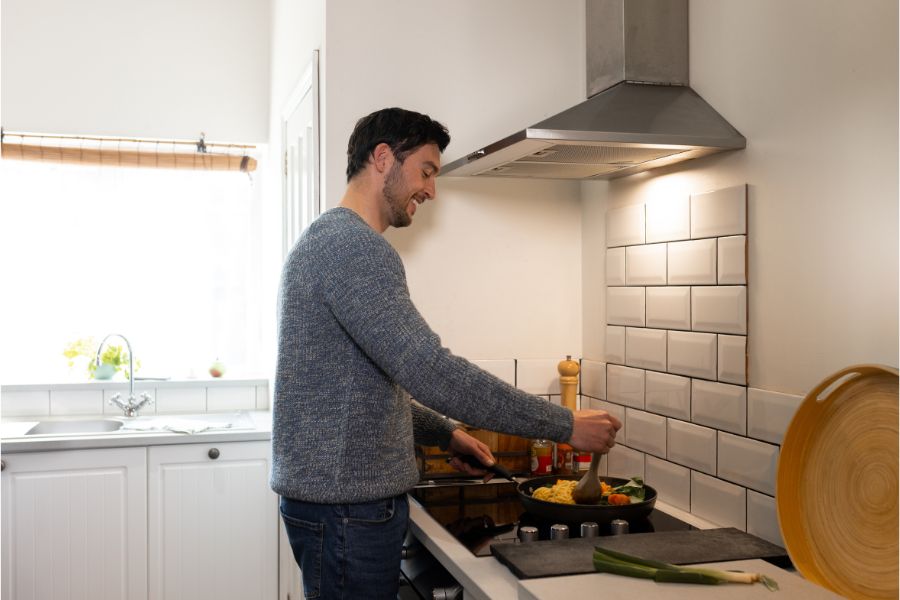
Extract ventilation is another form of rapid ventilation provided in rooms (such as kitchens and bathrooms) likely to be a source of pollution or odour. In refurbishment situations this form of ventilation is usually provided by mechanical extract fans either manually or, preferably, automatically controlled. A more energy-efficient form of extract ventilation would be passive stack ventilation (PSV), which has the advantages of not requiring power to operate and being 'on' all the time. PSV can be controlled by humidity sensors so that ventilation only occurs when needed, thus avoiding energy wastage.
In some cases ventilation units have a heat recovery facility that allows a proportion of heat to be recovered from the extracted air, which is used to pre-heat the incoming air.
Technical guidance available
» GPG 224 'Improving airtightness in existing homes'
» GPG 268 'Energy efficient ventilation in housing - a guide for specifiers on the requirements and options for ventilation'